


As manufacturers face increasing pressure to improve reliability, reduce downtime, and maximise existing assets, many organisations are rethinking how maintenance and asset management are structured.
The Challenge: Growth Created Complexity
In high growth manufacturing environments, sustained performance depends on how effectively assets are managed across the organisation. For one Irish medical device manufacturing facility, rapid expansion brought increasing pressure as new equipment was introduced and production volumes grew. Downtime began to rise, maintenance became increasingly reactive, and there was limited visibility of where effort should be focused.
The workforce was skilled and experienced, yet results remained inconsistent. Maintenance activity lacked structure, priorities were unclear, and the connection between effort and performance was weak. The organisation had capability, but it was not being applied in a coordinated or structured way.
Introducing PREMA
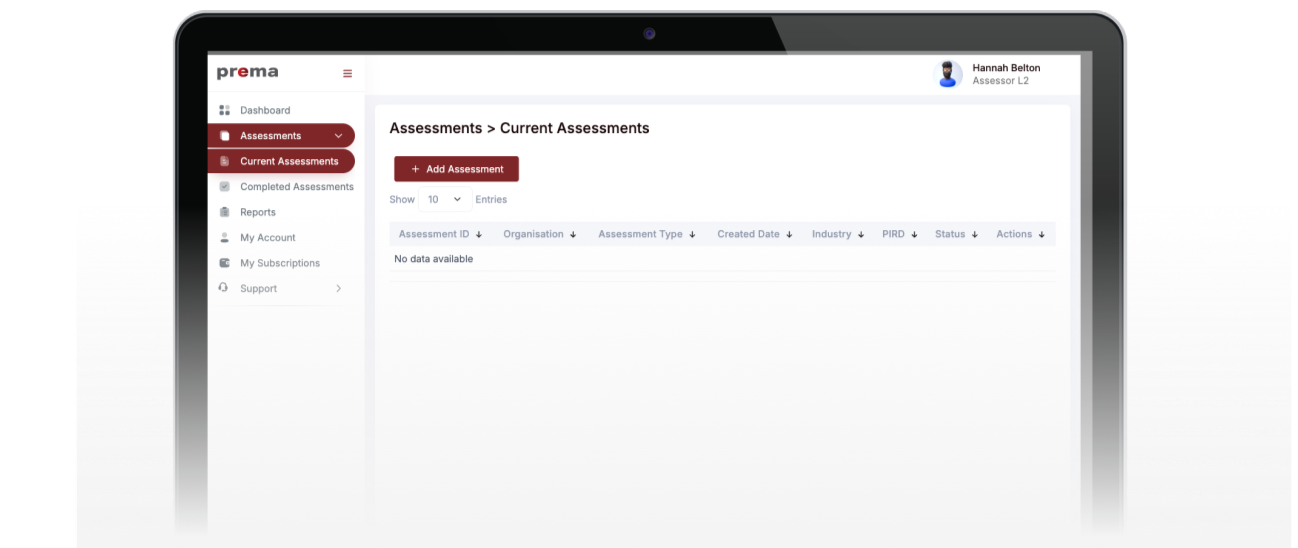
The decision was taken to step back and understand the current position before pushing further for output. This led to the introduction of PREMA, Performance Reliability Excellence in Maintenance and Asset Management, as the framework to guide the transformation.
PREMA is a structured asset management standard aligned to ISO 55001, developed from more than 30 years of practical experience and informed by over 170 asset management assessments across multiple industries. It provides a consistent approach to evaluating how an organisation manages its assets across their full lifecycle and translates that evaluation into a clear path forward.
A distinguishing feature of PREMA is its scope. The framework assesses performance across sixteen key areas, covering maintenance, operations, and engineering, while also examining the wider organisational functions that influence asset performance. Planning, scheduling, reliability strategy, materials management, and performance measurement are considered alongside people capability, organisational structure, finance, and quality. This creates a complete view of how the business operates through the lens of its assets.
From Assessment to Action
Through the PREMA process, the organisation gained a clear understanding of its current position. Strengths were identified, gaps were quantified, and priorities became visible. The outcome of the assessment was a detailed care plan, setting out a structured and prioritised programme of actions required to move from the current state to best practice. This care plan provided clarity, direction, and a practical sequence for implementation.
The PREMA team supported this transition by bringing experience, challenge, and structure. Their role ensured alignment across functions and helped embed consistent ways of working into day to day operations. The focus remained on delivering practical improvements that could be sustained over time.
This plant was part of a larger organisation that adopted PREMA as its group asset management standard. This provided a common language and framework across sites, which accelerated implementation and enabled collaboration. Lessons learned in one location could be applied quickly in another, while benchmarking across the group created transparency and shared accountability. The PREMA platform also supported this collaboration by providing a consistent method of assessment and tracking progress, allowing sites to learn from each other and develop excellence collectively.
Building a More Reliable Operation
As the framework was applied, the organisation developed a deeper understanding of asset criticality and its relationship to production, quality, and risk. Maintenance effort became more focused and aligned with business priorities. Planning improved, execution became more structured, and the use of data supported more informed decision making.
Over time, the operating model shifted. Maintenance became planned rather than reactive, and effort was directed where it delivered the greatest impact. Skilled personnel were deployed more effectively, and activities were linked directly to performance outcomes.
The Results
The results were significant. Manufacturing lead times reduced by more than 50 percent, while output increased by over 40 percent without additional capital investment.
- Manufacturing lead times reduced by over 50%
- Output increased by more than 40%
- Production increased from 100,000 to 480,000 units annually
- Reduced unplanned downtime
- Improved planning and execution
- Achieved using the same workforce and spares base
Beyond the measurable improvements, the organisation achieved a more stable and predictable operating environment. Teams moved away from constant reaction and towards structured planning, continuous improvement, and sustained performance. Asset management became embedded as a core discipline across the organisation.
This experience reflects a broader principle. In many organisations, the necessary capability already exists. The opportunity lies in applying it with clarity, alignment, and discipline. By stepping back, assessing against best practice, and following a structured care plan, organisations can unlock significant performance improvements without increasing cost.
PREMA provides that pathway by combining a defined framework with practical experience and delivery. It enables organisations to understand their current state, align around a shared standard, and progress in a structured and measurable way.
The outcome in this case was a transition from reactive firefighting to controlled, performance driven operation, achieved through better use of existing capability and a clear focus on what matters most.
Right measurement. Right asset. Right expertise.
PREMA will be exhibiting and speaking at Maintec, sharing practical insights into how organisations can improve asset performance through structured maintenance and asset management practices.